
-
Workshop on Himalayan peatlands promotes conservation efforts
-
Awareness on new labour codes and child labour held
-
72nd state-level wildlife week concludes
-
Upper Siang DA detains four under unlawful activities…
-
Papum Pare steps up anti-drug drive
-
Planning and Investment Dept alerts citizens on fraudsters
-
SPIC MACAY takes Indian heritage to remote border…
-
Workshop on Socio- Ecological Drivers and Landscape Adaptation held
-
Coffee Table Book on Arunachal Pradesh launched
-
ANYA celebrates Golden Jubilee 2026 with sports, cultural events
Bishnu Rana
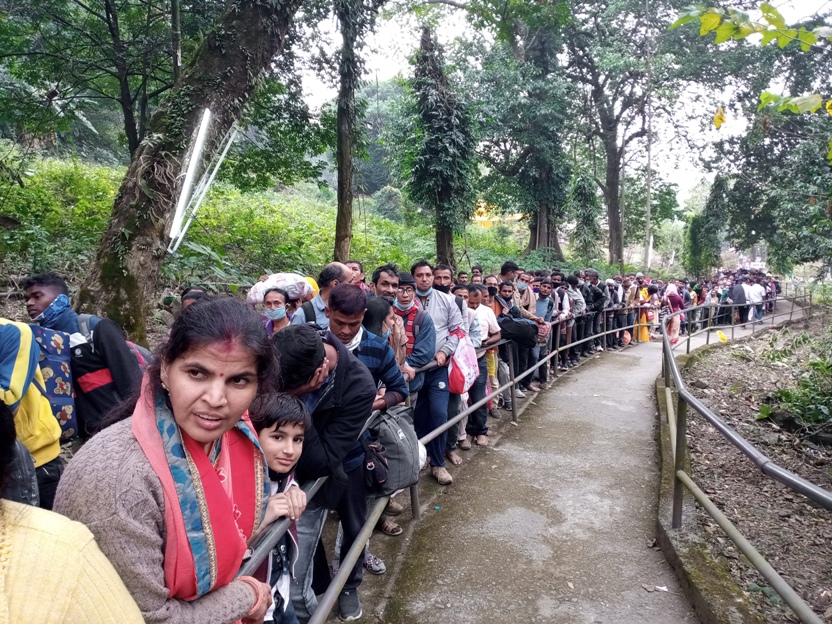
Parsuram Kund, Jan 15: Over 17000 devotees, including sadhus from the North East and across the country, took holy dip at the famed Parsuram Kund in Lohit district of Arunachal Pradesh on the auspicious occasion of Makar Sankranti. Most of the pilgrims, from Assam, Manipur, West Bengal, Bihar, Uttar Pradesh and Arunachal Pradesh thronged the holy site since the wee hours of January 14.
Due to the Covid pandemic, number of visitors was less than the last year.
Deputy Commissioner, Lohit, Marge Sora said "The district administration is constantly monitoring the mela, and has left no stone unturned to ensure a successful and hassle-free event. Holy dip started from January 12 and will go on till the 16th, with full official arrangement."
The Lohit police has made adequate security arrangements and deployed APP, APPBN, IRBN and 186 BN CRPF to ensure full proof security right from holy dip to vehicle arrangement. “Our boys are working hard since Thursday. At the entry--Dirak Gate, Namsai police is extending cooperation for proper placement of the vehicles coming from other part of Arunachal," informed SP Lohit, AK Singh.
At the entry check gate, it is mandatory for pilgrims to register their vehicles, avail Inner Line Permit including undergoing COVID test. At the mela site, a free health camp has been set up by Zonal Hospital, Tezu. Simultaneously, the186 BN CRPF Namsai also provided Khichidi to the pilgrims and free medical camp, round-the-clock volunteers to help the aged and physically challenged pilgrims and to control the crowd.
According to the legend recorded in the Kalika Purana, Srimad Bhagawat Gita and the Mahabharata, sage Parsurama washed away his sin of matricide in the waters of the Lohit River at Brahmakund. Situated within the Kamlang reserve forest, the Kund is surrounded by dense and pristine vegetation of Rudhraksha trees, the fruit of which is considered sacred to Hindu ascetics as well as general believers of the faith.

Kenter Joya Riba
(Managing Editor)She is a graduate in Science with post graduation in Sociology from University of Pune. She has been in the media industry for nearly a decade. Before turning to print business, she has been associated with radio and television.
Email: kenterjoyaz@easternsentinel.in / editoreasternsentinel@gmail.com
Phone: 0360-2212313