
-
Mock exercise held in major hospitals of ICR to strengthen…
-
State’s first renal transplant carried out at TRIHMS
-
SIFF voices concerns over SUMP, questions deployment of security personnel
-
Family of deceased school student protest outside Yupia…
-
Tawang Marathon: Khandu launches new logo, official T-shirt
-
APU must aim for greater heights, says new VC Prof.…
-
CM calls high level meeting following ANSU’s 48-hr bandh…
-
Governor visits Armed Forces outreach and awareness enclosures
-
Centre extends AFSPA in three Arunachal districts, few…
-
138 Bn CRPF clinches Inter- Battalion football title in…
Kenter J
ITANAGAR, Dec 12: The Kameng River is showing signs of improvement in turbidity levels after passage of over a month's time.The Kameng River turned turbid on October 29 last due to landslide in its upper reaches resulting in massive debris flow and large scale death of fish.
"The turbidity has improved over the last one month in Kameng River but it requires continuous and rigorous ecological monitoring. The rate of improvement is much slower than expected and it will take another six months at this rate for the river to return to normal," said Professor Punyasloke Bhadury, Head, Centre for Climate and Environmental Studies & Dept of Biological Sciences at IISER Kolkata. He however is optimistic that as winter sets in the higher reaches turbidity level will show greater improvement.
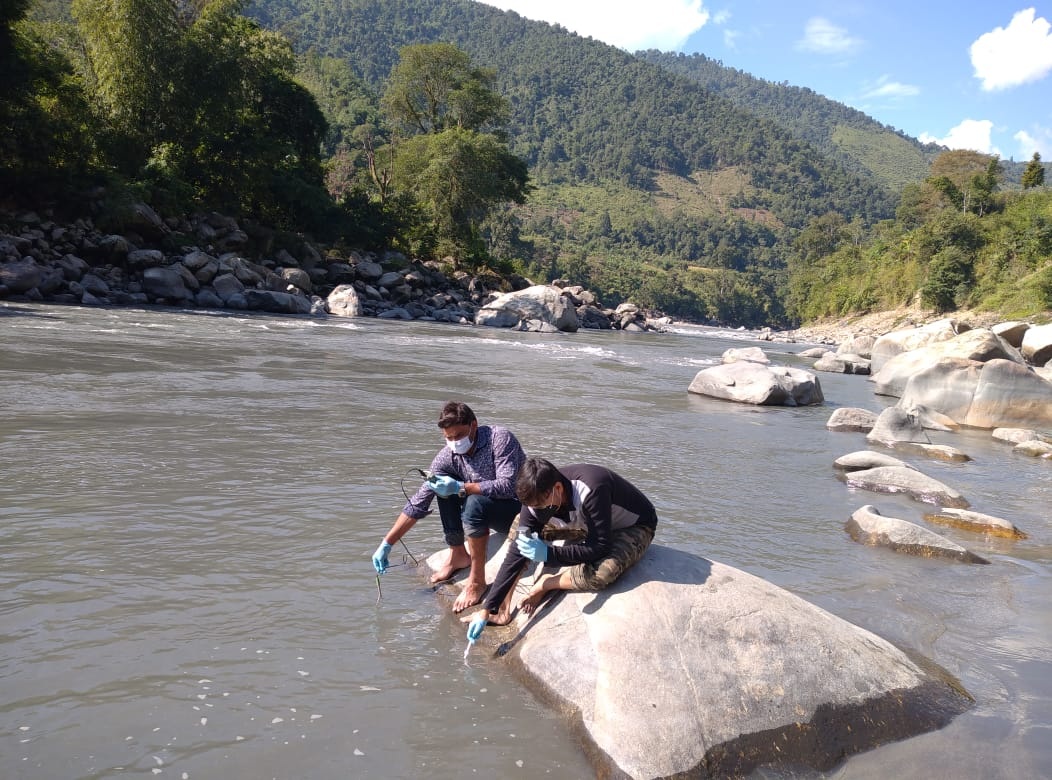
The team from IISER who has been monitoring the Kameng River since the beginning of the debris flow event, returned to ground zero on December 6 to conduct more tests. The team carried out underwater imaging in the Kameng, its tributaries and rivulets. Findings show the fish population in the Kameng River to be still absent.
" It is a concern that fish population is absent in the Kameng. Tributaries like Pacha have a healthy fish population and we hope that the fish return soon," Prof Bhadury says who conducted underwater imaging in the Pacha among others.
While the improvement in turbidity has been slow at around 30-40 per cent, but a positive finding has been that the nutrient stoichiometry including metal profiles do not exhibit any apparent changes around Seppa following excessive sediment flow in Kameng River.
Professor Bhadury who led an independent ecosystem assessment following the Bhagjan Gas blowout in Assam, says that the state must prepare itself for similar incidents like the Kameng River event.
"These events such as in Kameng River may happen in future. The State Government can rope in experts and map the health of all the major rivers of the state to build up robust baseline information. Such information will be pivotal towards integration and effective implementation of state disaster management plans keeping in mind the well being of local communities, livelihood and rich culture."

Kenter Joya Riba
(Managing Editor)She is a graduate in Science with post graduation in Sociology from University of Pune. She has been in the media industry for nearly a decade. Before turning to print business, she has been associated with radio and television.
Email: kenterjoyaz@easternsentinel.in / editoreasternsentinel@gmail.com
Phone: 0360-2212313