
-
36-hr ICR bandh marred by sporadic violence, Sub inspector…
-
Governor condoles demise of Bengia Tolum
-
Arunachal Pradesh to undertake Special Intensive Revision of …
-
Large acreage of wild cannabis destroyed in joint…
-
New community hub 'Ekta Bhawan' opens at Yazali Police…
-
Dr. Joram Aniya calls on Governor
-
Indian Army inaugurates transit facility at Sigar Military Station
-
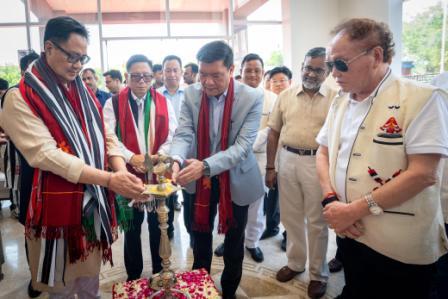 Khandu inaugurates Arunachal Niwas, fourth facility in New Delhi
-
ACS announces sit-in protest, demands CM’s resignation on moral grounds
-
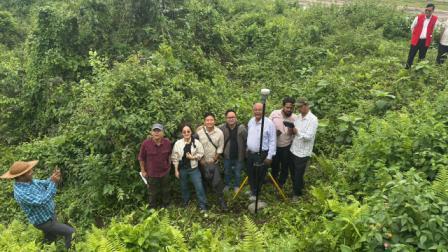 Assam-Arunachal border delineation exercise concludes in Lower Siang
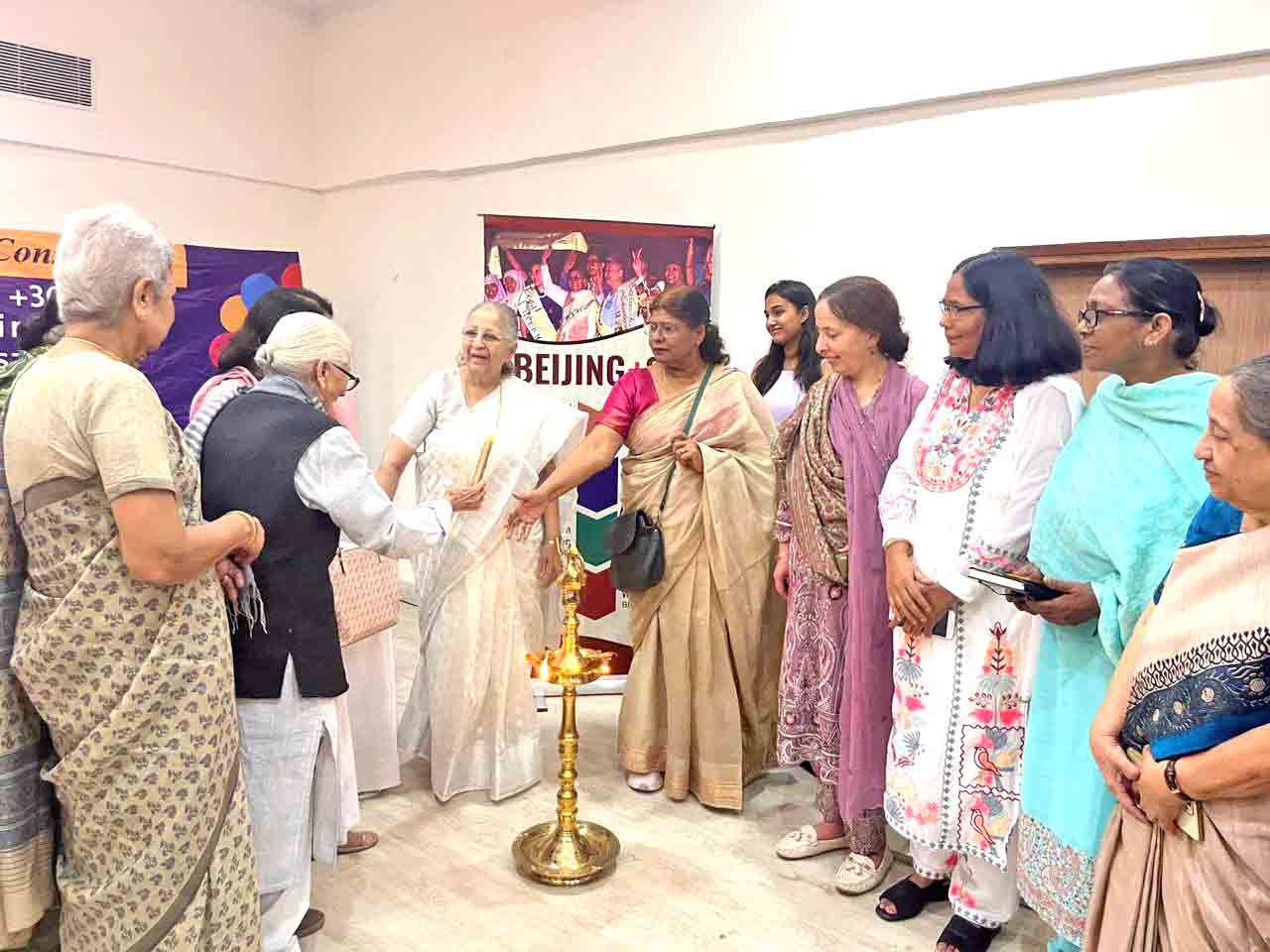
Itanagar, Oct 27: The National Consultation on "Beijing +30: Revisiting and Re-Envisioning Beijing" took place on October 22–23, at the All India Women’s Conference in New Delhi.
Kani Nada Maling, President of the Arunachal Pradesh Women’s Welfare Society (APWWS), represented her organization and actively contributed to discussions on critical issues, including women’s economic status, climate justice, violence against women, leadership, inclusion, and equity.
The consultation commenced with a video reflecting on the 1995 UN Conference in Beijing, highlighting the 12-point Charter of Demands. Dipti Bengia Tadar, was the official APWWS delegate to the 4th UN World Conference on Women in Beijing in 1995, and Jarjum Gamlin Ete, Advisor to the India Coordination Unit and participant at the NGO Forum in Huairou, China, and late Binny Yanga and Komoli Mossang represented the Country Women’s Association of India (CWAI) at the NGO Forum.
During a session, Kani raised specific concerns relevant to Arunachal Pradesh, such as the prevalence of polygamy, the orientation of elected representatives on women’s issues, and the importance of establishing robust networks with local women’s organizations. She emphasized the need to earmark thirty percent of funds from the MLA/MP Local Area Development (LAD) for the welfare and development of women and children in the region.
Key Recommendations from APWWS was for Ban on Polygamy. The organisation said that implementing a ban on polygamy in Arunachal Pradesh to promote women’s legal equality and dignity, addressing a critical aspect of customary practices that impact women's rights;Orientation for Elected Representatives; Allocation of MLA/MP Local Area Development (LAD) Funds: Earmarking thirty percent of LAD funds for programs focusing on women’s and children’s empowerment, healthcare, and education and Strengthening Networks with State-Based Women’s Organizations: Emphasizing the necessity of stronger alliances with women’s organizations statewide to foster a unified and impactful platform for advocacy and action and POSH Act Implementation
As part of the national consultation, Kani provided written feedback on the evaluation of women-centered legislation introduced since the Beijing Declaration. She noted that while many state departments have formed Internal Complaint Committees (ICCs) and Local Complaint Committees (LCCs), these committees often exist nominally, with members lacking awareness of their roles and responsibilities. Kani highlighted the importance of the Department of Women and Child Development (WCD) in establishing clear guidelines for the proper functioning of these committees, along with awareness initiatives and honoraria for committee members.
Total 18 states across the country participated in the consultation meeting.
Kenter Joya Riba
(Managing Editor)She is a graduate in Science with post graduation in Sociology from University of Pune. She has been in the media industry for nearly a decade. Before turning to print business, she has been associated with radio and television.
Email: kenterjoyaz@easternsentinel.in / editoreasternsentinel@gmail.com
Phone: 0360-2212313