
-
North East must become centre of livestock innovation, says Wangsu
-
Upper Siang DC speaks on ongoing SUMP crisis
-
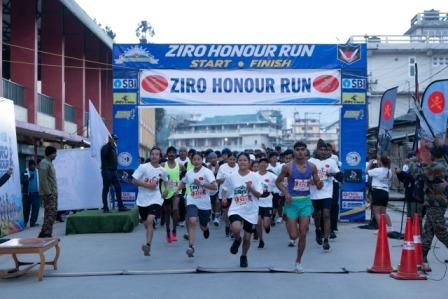 Soldiers, civilians, leaders run together at Ziro Honour Run 2026
-
Governor extends Poi Pee Mau Tai greetings
-
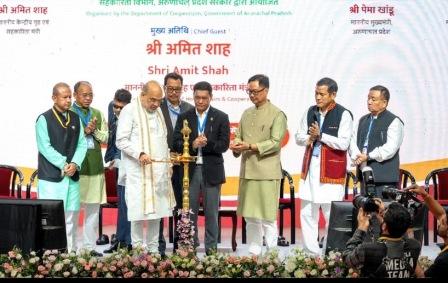 Shah unveils AP ‘Cooperative Vision Document 2047’
-
Curtains fall on 8th Arunachal Literature Festival
-
Shah visits BJP Arunachal Pradesh state office; Interacts with party…
-
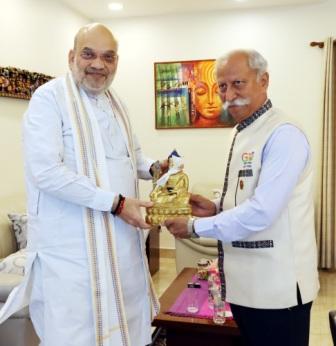 Governor meets Union Home Minister
-
Shah inaugurates permanent campus of 12th Battalion NDRF at Hollongi
-
 Young artists and poets take part in Viksit Bharat Young…
GUWAHATI, Nov 29: The two-day National Scientific Convention on “Transforming Indigenous Livestock and Poultry Production through Smart Technologies and One Health Concept: Emerging Frontiers for Viksit Bharat 2047”, alongside the XXIV National Academy of Veterinary Sciences (India) Convocation, 2026, commenced at Assam Veterinary and Fishery University (AVFU), Khanapara, Guwahati, on Sunday.
The national-level academic gathering, jointly organised by AVFU and the National Academy of Veterinary Sciences (India), brought together leading veterinary scientists, academicians, institutional heads, researchers and professionals from across the country to deliberate on emerging scientific frontiers, technological advancements and policy approaches for strengthening India’s livestock and poultry sectors. The convention will conclude on November 30.
Gabriel D. Wangsu, Arunachal Pradesh Minister for Agriculture and Allied Departments inaugurated the convention as the chief guest, underscoring the need to connect scientific research with field-level requirements and transform the country’s indigenous livestock resources into sustainable economic opportunities.
Addressing the gathering, Wangsu said the animal husbandry sector had emerged as a significant contributor to India’s rural economy, accounting for approximately 30.87 per cent of the Agricultural and Allied Gross Value Added (GVA) and 5.49 per cent of the country’s total GVA, amounting to nearly Rs 15.06 lakh crore in 2023-24.
He observed that the sector’s importance extended beyond economic contribution, supporting millions of rural households, strengthening nutritional security and creating opportunities for employment and entrepreneurship.
With India moving towards the vision of Viksit Bharat 2047, he said the focus must shift from merely increasing production to ensuring safe, nutritious and sustainable food security through scientific interventions, technological innovation and stronger institutional partnerships.
A significant focus of the Minister’s address was the potential of the Northeast’s indigenous livestock resources, including Mithun, yak, indigenous cattle, pigs, goats, sheep and local poultry.
He called upon universities and research institutions to intensify region-specific research and develop scientific solutions suited to the region’s unique geography, climatic conditions and farming practices.
“Our indigenous livestock is not merely a heritage to preserve; it is an economic asset to develop. The North East must move beyond being only a consumer of technology and emerge as a centre of innovation in indigenous livestock development,” Wangsu said.
Referring to the recommendations of the High-Level Task Force for the North Eastern Region, constituted under the convenorship of Arunachal Pradesh Chief Minister Pema Khandu, he highlighted the need for a time-bound roadmap to achieve greater self-reliance in milk, meat, eggs and fish production.
He said the vision of transforming the Northeast into a commercially viable production and market hub would require improved productivity, value-chain infrastructure, institutional convergence and greater participation of private and cooperative sectors.
The convention’s central theme also received considerable emphasis in the Minister’s address, particularly the growing role of artificial intelligence, genomics, molecular diagnostics, biotechnology, precision livestock farming and digital disease surveillance in modern veterinary science.
Wangsu said veterinary professionals had evolved beyond their conventional role of treating animal diseases and were now important contributors to food security, public health, rural development and economic growth.
He stressed that veterinary education must keep pace with emerging developments through greater emphasis on practical training, clinical exposure, laboratory work, farm management, animal welfare, antimicrobial resistance and climate resilience.
While recognising the potential of artificial intelligence in disease detection, diagnosis and animal health monitoring, he emphasised that technology must complement rather than replace professional judgement and compassion.
“Technology may assist a veterinarian, but wisdom, professional judgement and compassion must always guide the profession,” he said.
He also called for stronger engagement between veterinary professionals and farming communities, stressing that scientific advice must be practical, affordable and responsive to the needs of livestock owners.
Encouraging young graduates to explore entrepreneurship in dairy, piggery, poultry, goatery, Mithun and yak development, feed and fodder production, veterinary services and food processing, Wangsu said the future belonged not only to those seeking employment but also to those equipped to create opportunities for others.
He further highlighted the need for climate-resilient livestock systems to address heat stress, fodder shortages, water scarcity and emerging animal diseases through scientific feeding, improved housing, efficient water management and integrated farming.
The Minister also acknowledged the longstanding contribution of the College of Veterinary Science, Khanapara, to Arunachal Pradesh, noting that generations of its alumni had served the state since the establishment of its Department of Animal Husbandry in 1972.
The scientific sessions brought together institutional heads, senior scientists and experts from reputed agricultural and allied institutions to deliberate on a wide range of contemporary issues affecting India’s livestock economy.
The programme also featured the General Body Meeting of NAVS (India) and an ICVR brainstorming session. National Academy of Veterinary Sciences awards were presented to eminent scientists and professionals in recognition of their contributions to the advancement of the academy and the veterinary and allied sectors.
Following the inaugural session, Wangsu visited the exhibition hall showcasing scientific innovations, technologies and developments in the livestock and allied sectors.
NAVS President Dr D.V.R. Prakash Rao; Dr K.M. Bujarbaruah, former Deputy Director General of ICAR and former Vice-Chancellor of Assam Agricultural University; DrRaghavendra Bhatta, Deputy Director General (Animal Science), ICAR, New Delhi; Dr B. MaheswarappaNaveena, Animal Husbandry Commissioner, Government of India; Prof. NiranjanKalita, Vice-Chancellor, AVFU; and Major General Dr M.L. Sharma were among the dignitaries present.
D. Longri, Director of Animal Husbandry, Veterinary and Dairy Development, Government of Arunachal Pradesh, accompanied the Minister along with senior departmental officers and alumni of the College of Veterinary Science, Khanapara.

Kenter Joya Riba
(Managing Editor)She is a graduate in Science with post graduation in Sociology from University of Pune. She has been in the media industry for nearly a decade. Before turning to print business, she has been associated with radio and television.
Email: kenterjoyaz@easternsentinel.in / editoreasternsentinel@gmail.com
Phone: 0360-2212313