
-
Tensions flare as anti-SUMP protest turns violent, prohibitory orders imposed…
-
CM appeals for peace, invites stakeholders for talks on SUMP…
-
AFTF questions govt’s handling of anti-dam protests, Taksing border row
-
 Tawang Marathon witnesses 4,500 participants in show of fitness and…
-
Gandhi Shilp Bazaar 2026 showcases rich handloom, handicraft of NE
-
Team DUA pays homage to late Jambey Tashi
-
Khet Bachao Abhiyan launched to promote natural farming…
-
SUMP impasse: Demonstrations turn tense as Police tear gas…
-
Governor presents ‘Land of Rising Sun plaque for Excellence’…
-
DC reviews preparations for International Tourism Mart…
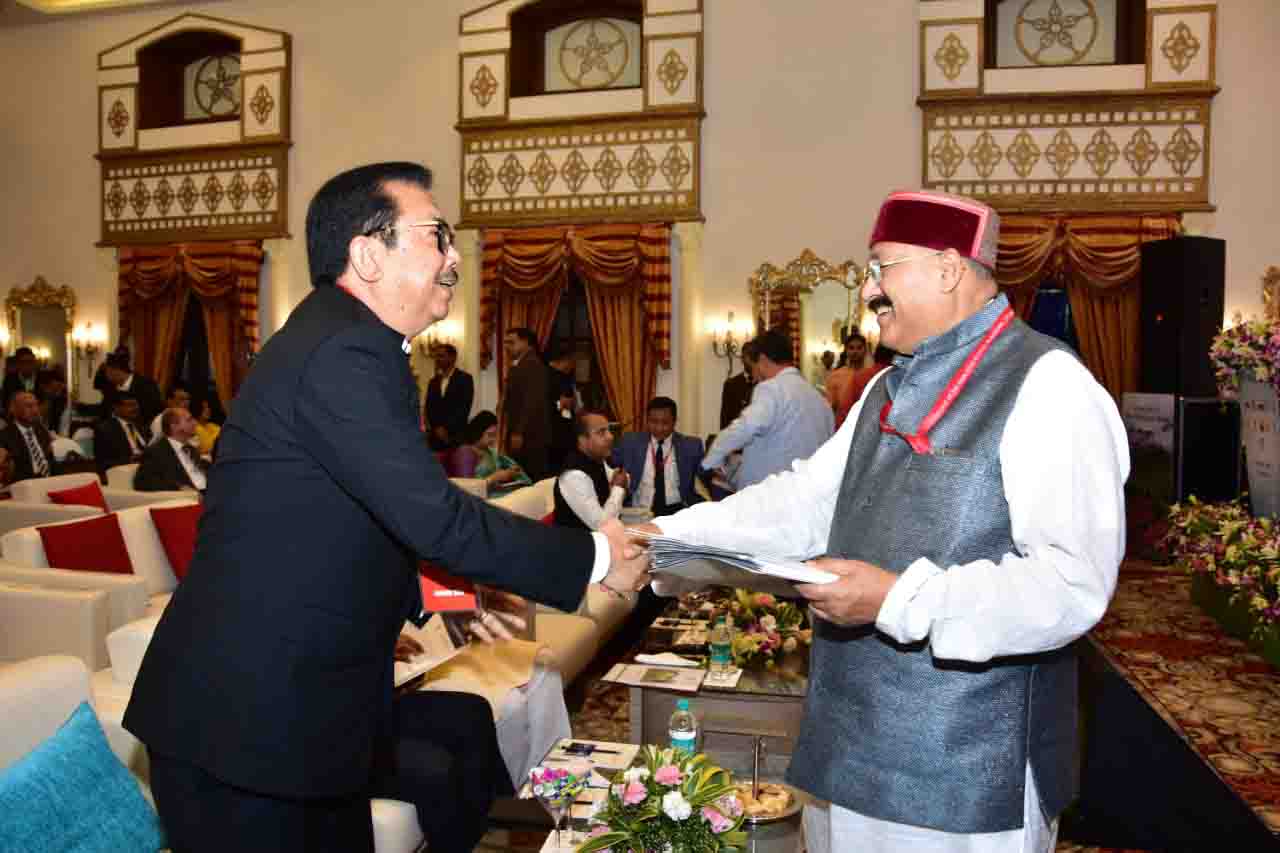
DEHRADUN Jul 28: The One-Day Conclave of Himalayan States which was conducted today at Mussoorie to discuss the priorities and needs of the states of the Indian Himalayan Region (IMR) was attended by Deputy Chief Minister of the state Chowna Mein.
Union Finance Minister Nirmala Sitharaman inaugurated the conclave where the main objective was to discuss various issues related to development of these Himalayan States. It was also attended by the states of Uttarakhand, Himachal Pradesh, Meghalaya, Nagaland, Sikkim, Assam, Tripura, Mizoram & J&K.
Mein said that the issues which are common to all Himalayan states need timely intervention from the Fifteenth Finance Commission. “The Joint Memorandum of the Himalayan States to be submitted to the 15th Finance Commission is a significant initiative”, said Mein and added that it is in the right direction and very clearly puts forward the common concerns of all Himalayan states. He stressed that the criteria for ecosystem services should only be based upon absolute forest area in the state as Arunachal Pradesh has a quality forest cover of 82% of the total area and thus provides invaluable ecological services to the nation and the world as carbon sink. However, this very asset has become a development disability for the State and its people and in the name of conservation, local people are deprived of modern development and no compensation has yet been given to the State, Mein added.
He further added that the State has a stock of 148.52 tonnes of carbon stock per hectare which is highest in the country and its value is estimated to be about Rs. 48000 crores annually. The forest cover of the State requires due cognizance, which has been ensured in the state’s suggested formula. Although the 14th Finance Commission had recognized this factor, the earlier weightage now needs to be enhanced to keep in tune with the economic implications arising from denudation of the State's forest cover with agricultural practices getting affected in the process, Mein added. He advocated that the Scientific Vulnerability Index may be used to devolve the funds between states as the Himalayan States are located in high Seismic Zone which are highly vulnerable to earthquakes along with other natural disasters.
The Dy. CM highlighted the recurring problems faced by Arunachal such as annual devastation caused by relentless monsoons which destroys roads and other infrastructures and the current norms of disaster relief under SDRF/NDRF guidelines are falling meagre for restoration process.
The negative effect of Climate Change and Jhum/shifting cultivation on the state’s ecosystems, biodiversity and its subsequent impact on socio-economic condition of the indigenous people of the state was highlighted. He said that Arunachal Pradesh is more vulnerable compared to other states owing to the fact that it has a large area under slope greater than 30%, low road density, least livestock to human ratio, lowest percentage of area under horticulture crops, least participation in MGNREGA, no crop area under insurance and low percentage of farmers taking loans thereby minimizing the CD ratio. Keeping in view of the above hurdles, Mein suggested that there is a need for holistic and integrated planning to tap the water resources of the North Eastern Region for optimum utilization and sought for setting up the Headquarter of North East Water Management Authority at Itanagar.
Mein reiterated that there is huge scope for development of sustainable tourism in the Himalayan states for which adequate investment is required for development of basic infrastructure with focus on marginalised areas and groups for achieving the Sustainable Development Goals (SDGs), particularly Goal 8 (Decent Work And Economic Growth) and Goal 12 (Responsible Consumption And Production). Citing that although infrastructure development has been accorded top priority in the strategy of the State’s economic development over the four decades of planning, Arunachal Pradesh is lagging behind the national average in most of the components of infrastructure such as roads, power and telecommunication.
He said that the per capita cost of providing not only physical infrastructure but also public services is very high in the Himalayan Region and as such these factors must be kept in mind while assessing availability of social and physical infrastructure per unit of area. Mein also said that the Cost Disability Index be given due weightage while allocating resources among the States. To remove the critical gaps in Physical and Social infrastructural needs, DCM suggested to strengthen the economic conditions of the people living in the remote border blocks and to arrest migration from the border areas towards the plains, Fifteenth Finance Commission should make specific recommendation with strategic importance vis-à-vis International border. Speaking on Externally Aided Projects, Mein highlighted that Arunachal Pradesh is perhaps the only state in North-East which has been deprived of the externally aided projects from the World Bank, ADB and JICA due to opposition from China and urged upon the Commission to make suitable recommendations for making alternative arrangements with regard to Externally Aided Projects.
He further reiterated that there is a need for deciding on a new institutional arrangement which recognizes the need of Special Category States and provides for a weightage or a norm to enable compensatory transfers, keeping in view the declining trend of the share of statutory Finance Commission transfers vis-a-vis non-discretionary erstwhile Plan and Non-Plan transfers. “Our request for accordance of Special Category Status to all the States of Indian Himalayan Region may be considered due to challenges being posed by Cost Disability factor, huge infrastructural deficit in the critical sectors, hilly terrain, hostile topography, migration from border areas and serious connectivity issues etc,” said Mein.
He also requested the Fifteenth Finance Commission to take into account the factors concerning area, population, economic backwardness contingent on infrastructure deficit, inadequate financial inclusion of people, constraints in obtaining goods and services at economic rates etc while fixing share of the state in central taxes.

Kenter Joya Riba
(Managing Editor)She is a graduate in Science with post graduation in Sociology from University of Pune. She has been in the media industry for nearly a decade. Before turning to print business, she has been associated with radio and television.
Email: kenterjoyaz@easternsentinel.in / editoreasternsentinel@gmail.com
Phone: 0360-2212313