
-
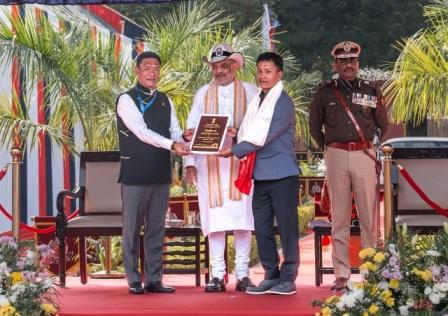 Union Home Minister confers prestigious President’s Police Colour to Arunachal…
-
Siang project will proceed with constructive dialogue, says Amit Shah
-
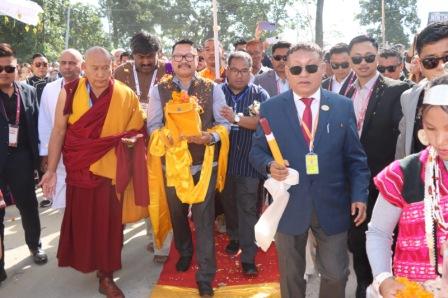 Arunachal bids farewell to Sacred Relics of Lord Buddha after…
-
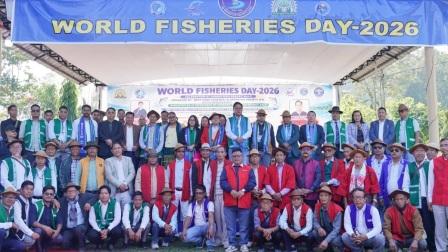 Aalo hosts two-day Fish Mela; Wangsu calls for fisheries sector…
-
Eastern Army Commander calls on the Governor
-
Governor congratulates Arunachal Pradesh Police on conferment of President’s Police…
-
APSLSA organises legal awareness under “Bal Vivah Mukt Bharat” campaign
-
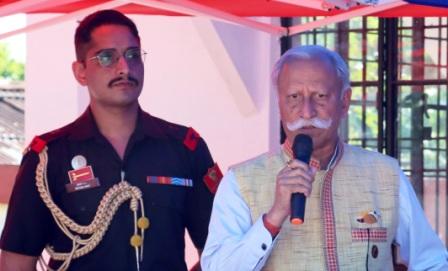 Governor chairs security review meeting
-
Foot march covering nearly 500km against SUMP reaches Itanagar from…
-
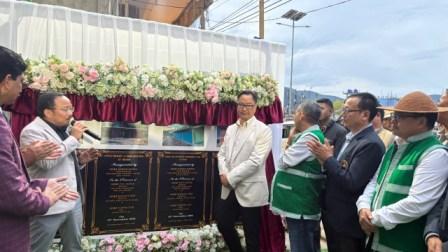 Rijiju inaugurates various development projects in Aalo
AALO, Nov 21: A two-day Fish Mela-cum-Awareness, Capacity Building and Motivation Programme commenced in Aalo, West Siang district, on Saturday to mark World Fisheries Day, with a focus on promoting sustainable fish farming, strengthening rural livelihoods and unlocking the economic potential of Arunachal Pradesh’s fisheries sector.
Organised by the West Siang Fisheries Co-operative Society Ltd. in collaboration with the Panchayati Raj institutions and the Department of Fisheries, West Siang district, the programme is being held on November 21 and 22 under the theme, “Promoting Sustainable Fisheries for Livelihood, Nutrition and Economic Prosperity.”
State’s Fisheries Minister Gabriel D. Wangsu, who attended the event as the chief guest, in his address called for a comprehensive transformation of the state’s fisheries sector through the adoption of modern technologies, scientific fish-farming practices and greater community participation. He emphasised that fisheries must evolve from traditional subsistence-based activities into viable economic enterprises capable of generating sustainable incomes.
Appreciating West Siang’s agricultural practices, the minister lauded the community for cultivating diverse crops and embracing integrated farming systems. However, he expressed concern over the persistence of unemployment despite the district’s abundant resources and economic opportunities. He stressed that greater determination, focused efforts and entrepreneurial commitment were essential to translate these resources into productive ventures.
The minister also flagged the diversion of funds provided under various government beneficiary-oriented schemes, observing that the misuse of financial assistance often deprives genuine and deserving farmers of intended benefits. He called upon beneficiaries to utilise government assistance responsibly and ensure that the objectives of these schemes were not undermined.
Emphasising the need to modernise fisheries, Wangsu urged farmers to move beyond conventional practices and adopt improved technologies and scientific methods to enhance fish production, productivity and income. He also cautioned against spreading efforts across multiple sectors without giving any particular enterprise the sustained attention and dedication required to succeed.
Raising environmental concerns, the minister expressed serious apprehension over destructive fishing practices in rivers, particularly the use of explosives, electrocution and bleaching agents. He called for concerted action to curb such illegal methods, which threaten aquatic biodiversity and the long-term sustainability of riverine resources. He also appreciated community initiatives to discourage these practices and stressed the importance of collective responsibility in protecting the state’s riverine resources.
Wangsu commended the organisers for giving the World Fisheries Day celebration a practical and outcome-oriented approach, with activities aimed at creating awareness, strengthening technical capacities and providing direct exposure to fish farmers.
A major highlight of the programme was a river ranching initiative at Humgo-Rigo in Aalo, aimed at promoting the conservation and replenishment of aquatic resources. The occasion also recognised the contributions of pioneers and progressive fish farmers of the district. The minister presented mementos and certificates to the awardees in appreciation of their contributions to the development of fisheries.
The Fish Mela and Fisheries Exhibition featured fresh fish display and sale, fisheries technologies and innovations, successful fish-farming models and technical demonstrations. Awareness and capacity-building sessions were also organised to encourage sustainable aquaculture and familiarise farmers with improved practices.
Government officials, representatives of cooperative societies, Panchayati Raj Institution members, fish farmers and self-help groups participated in the programme.

Kenter Joya Riba
(Managing Editor)She is a graduate in Science with post graduation in Sociology from University of Pune. She has been in the media industry for nearly a decade. Before turning to print business, she has been associated with radio and television.
Email: kenterjoyaz@easternsentinel.in / editoreasternsentinel@gmail.com
Phone: 0360-2212313